Business automation
07.07.2026
production-order-management-system
Case study: Production order management system
See how we helped a manufacturing company that wanted to reduce production time and eliminate delays by automating business processes.

.webp)
Modern technologies help manufacturing companies increase work efficiency... but that's not all. Read the article and discover the benefits of implementing automation in the industry!

When we talk about automation in the manufacturing industry, it is worth clarifying what kind of process improvement we mean. In manufacturing companies, automation covers two main areas that affect the company's operational efficiency in different ways:
Both the introduction of automation and robotization affect the efficiency of manufacturing companies. However, it must be remembered that these are two different areas, and in most cases, their implementation is handled by different contractors. Some companies specialize in so-called industrial automation, i.e., robotics, while others specialize in the digitalization and automation of processes carried out using computers and other office equipment.
At Sagiton Automation, we deal with the latter type of improvement, which can support both office processes and production-related activities. If the topic of production automation is not familiar to you, you can read more about how you can automate your company's operations using so-called BPA (Business Process Automation) in our article "6 Production Process Automations to Boost Profitability".
Below, we present the 5 most important benefits of process automation in manufacturing companies. However, it is worth remembering that the scale of the effects depends on what automations we implement, which areas they cover, and what activities a given company focuses on.
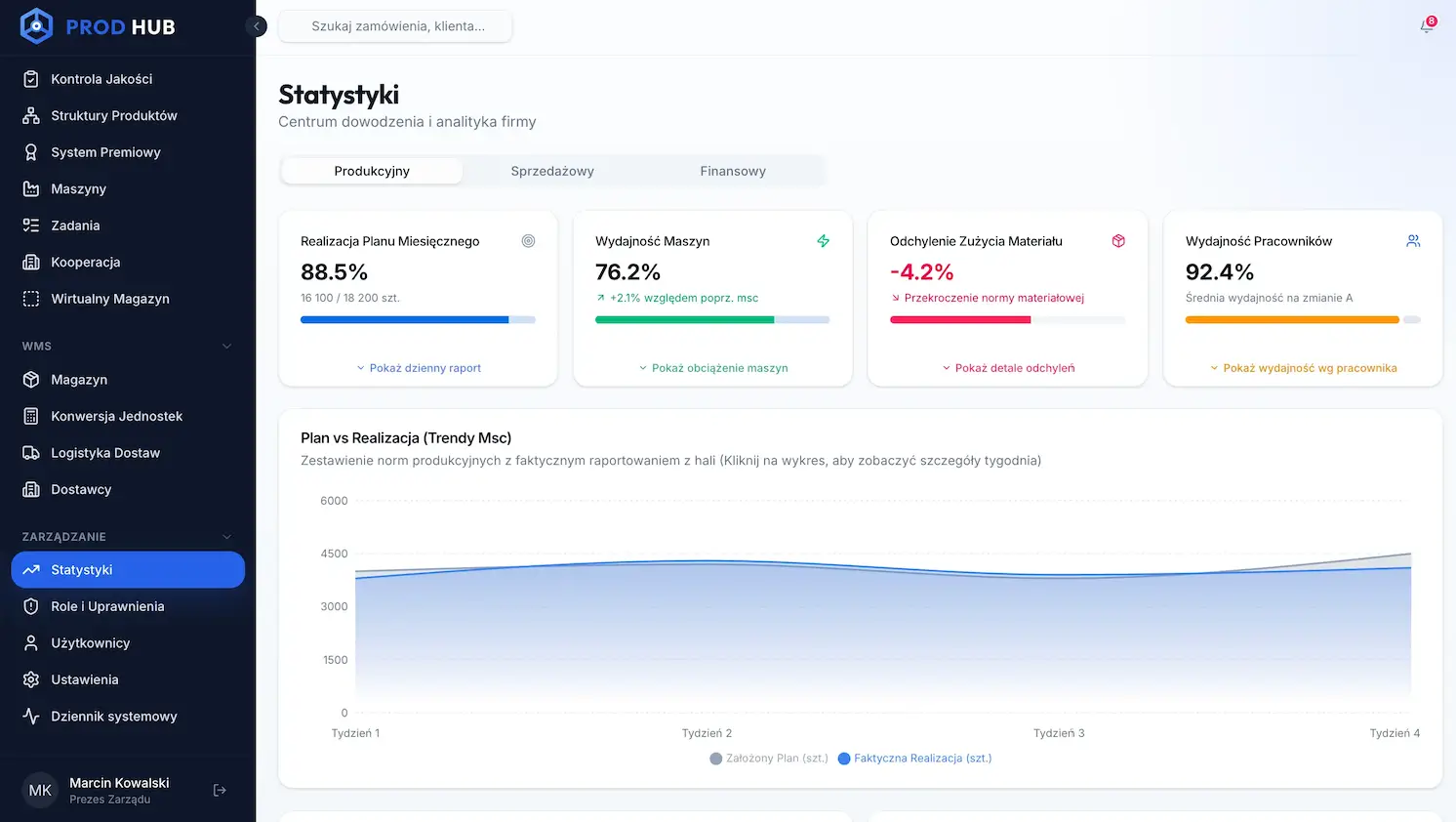
When implementing automation, it is worth focusing first on streamlining tedious, time-consuming, and repetitive tasks. When such activities are automated, employees can devote more time and attention to tasks that require experience, analysis, or decision-making. Reducing repetitive tasks allows manufacturing companies to operate more efficiently.
A good example of such automation is automatic production reporting. Instead of manually filling out paper reports or Excel spreadsheets, employees use data that is automatically collected and populated in the system. As a result, they can focus on more strategic activities, and the company achieves better utilization of human resources.
Implementing process automation also helps to reduce the number of errors that occur when performing repetitive tasks. When manually filling out extensive reports, transcribing data, or performing calculations, even experienced employees can make a mistake, especially under heavy workloads – which is unfortunately common in manufacturing plants.
Well-designed and tested automation performs these operations according to established rules, significantly reducing human error. This not only improves data quality but also cuts down on the time required for subsequent verification and correction.
Both of the previous benefits are closely linked to a third: the reduction of operating costs. Process optimization software impacts this aspect in two ways:
This is the primary area where manufacturers see the potential to increase their market competitiveness. Greater precision leads to lower costs, and lower costs allow for more competitive pricing.
Looking to improve efficiency in your production facility? Contact us to schedule a free consultation and learn how to approach automation.
Free consultationThis brings us back to reporting, but from a different perspective. If your company still prepares reports on paper, tracks inventory with sticky notes on monitors, or leaves notes for the next shift on scraps of cardboard, it is definitely time for a change. In many cases, data recorded on paper never makes it into the company system and is simply lost over time. This means losing information that could be extremely valuable today, as well as months or even years from now.
On one hand, if we lack data from recent days, weeks, or months, it is difficult to identify the root causes of delays, errors, or other issues. This simply hinders day-to-day business management. On the other hand, a lack of historical data makes improving management quality much harder. After all, how can we improve the way a company operates if we don't know what worked well in the past and what didn't?
Fortunately, automation – and increasingly, artificial intelligence – is helping manufacturing companies with automated reporting, data collection, and analysis. As a result, information is not lost, remains available in real-time, and can truly assist in decision-making.
There are many benefits to production automation, but one of the most important emerges once we have managed to put out most of the daily "fires." If employees and management do not have to constantly oversee manual reporting, re-enter data, verify the same information, or react to problems caused by disorganized workflows, they can finally focus on growth.
When key manufacturing activities are organized, repeatable, and automated where appropriate, it becomes easier to scale operations. The company can handle more orders, develop new areas, increase sales, or introduce new products without adding a proportional amount of manual work.
So it's worth to remember that automation provides more than just time savings. It allows you to organize your company to the point where, instead of constantly solving immediate problems, you can start thinking about how to grow and stay ahead of the competition.
Companies choose to automate production tasks primarily to reduce manual, repetitive work, minimize errors, and make better use of time. Well-implemented automation also facilitates data collection, management, and decision-making based on real-time information. In the long run, it allows you to streamline processes and create the conditions for further business scaling.
If you want to start automating processes in your company, contact us! During a free online consultation, our specialist will advise you on how to begin an effective implementation.
.webp)
At Sagiton, we help companies digitize and streamline their processes. Fill out the contact form, and one of our specialists will reach out to schedule a free online consultation, where you'll learn which automations are worth implementing in your business.
Free consultation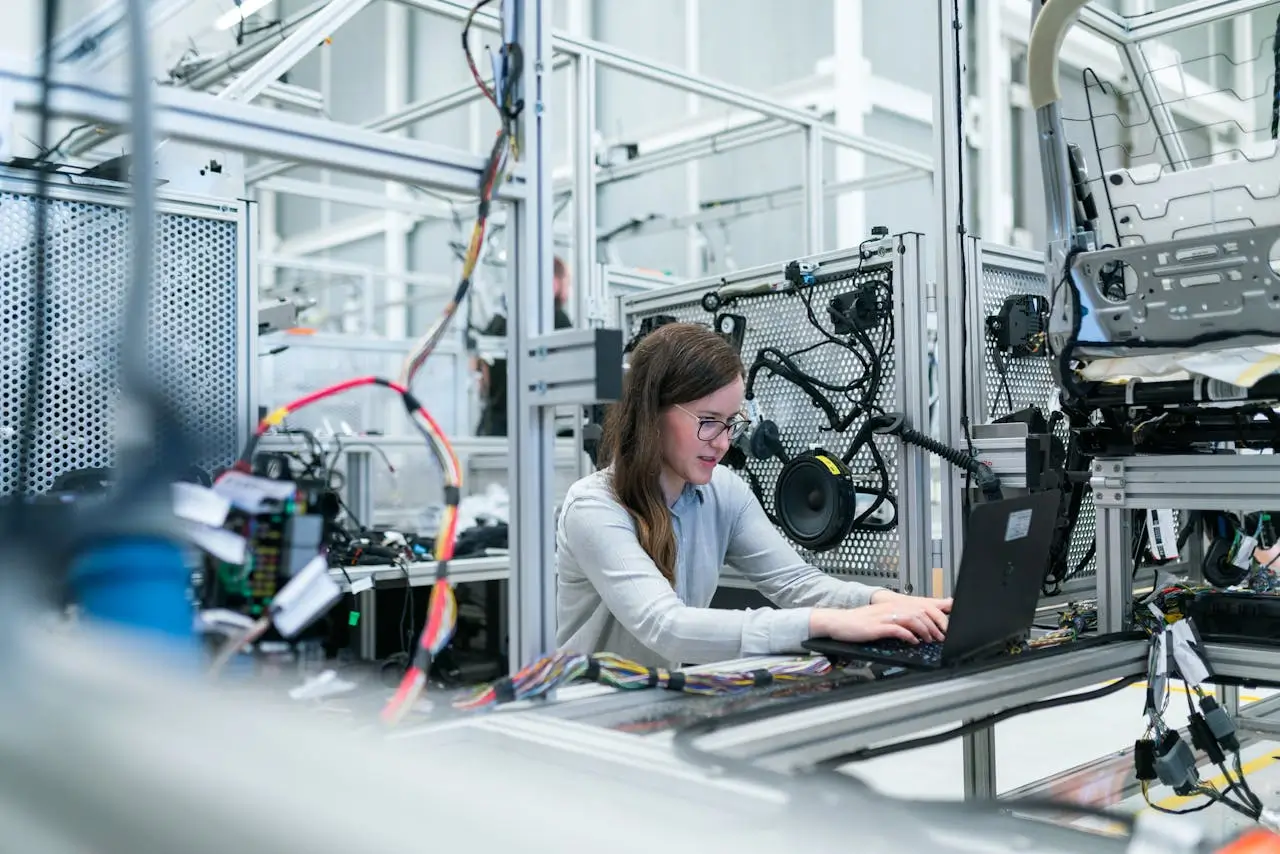
Business automation
07.07.2026
production-order-management-system
Case study: Production order management system
See how we helped a manufacturing company that wanted to reduce production time and eliminate delays by automating business processes.
Select the topic you are interested in in the form and our specialist will contact you within 24 working hours.
Thank you for contacting us!

.webp)
.webp)
