Why are more and more industries implementing artificial intelligence?
Artificial intelligence allows for the automation of processes that until recently seemed too complex to be effectively optimized. AI can analyze vast amounts of data, generate text and images, and support decision-making. Also gaining importance are AI agents, which are solutions capable of independently performing specific tasks, reacting to changing conditions, and executing multi-stage processes. Thanks to the development of artificial intelligence, automation has reached a whole new level.
In practice, this means the ability to complete tasks faster, reduce errors, and make better use of employees' time. Optimizing processes with AI allows companies to lower operating costs, manage resources more efficiently, and allocate budgets to activities that truly support business growth.
At Sagiton, we implement AI-based solutions in various sectors including e-commerce, accounting, HoReCa, logistics, and wholesale. This technology is also increasingly being used by our clients in the construction industry—and in this article, we will discuss its capabilities, tools, and benefits for companies in this field.
Differences between AI on the construction site and AI used in offices
When talking about artificial intelligence in construction, it is worth distinguishing between robotization and the automation and digitalization of processes. Robotization primarily concerns the physical execution of tasks—construction sites use autonomous drones, robots, sensors, and advanced machinery that support workers or partially take over their duties.
In this article, however, we will focus on digital solutions that most often streamline the work of offices, administrative teams, and managers overseeing construction work. These include integrations between systems, algorithms that automate repetitive tasks, data analysis tools, and applications that support document flow, planning, and decision-making. In the following paragraphs, we will describe some of the most common ways to use AI in the AEC industry.
Discover examples of AI applications in construction
Artificial intelligence is used at many stages of project implementation—from concept preparation and work coordination to winning new contracts. Below, we present three of the most common ways this technology is used in construction.
AI in architecture – generative design
Generative design is a method where software creates various project variants based on parameters defined by the user, such as dimensions, spatial layout, material types, costs, or technical requirements. Instead of manually preparing every concept from scratch, the designer specifies the conditions the project must meet, and the algorithm generates possible solutions and helps select the best-fit variant.
Such AI tools for construction can significantly speed up the preparation of offers, product configurations, and preliminary designs. The system automatically performs some calculations, compares variants, and selects elements according to established rules. As a result, the client receives a proposal and quote faster, and the company reduces the risk of errors resulting from manual data entry or repetitive calculations.
Generative design works well for manufacturers offering custom-made elements and for large design firms that prepare many similar concepts. In such cases, artificial intelligence can optimize team workflows, reduce the time needed to prepare subsequent variants, and increase the efficiency of the entire design process.
An example of a tool in this area is the Hypar platform, that automates building design using data and configurable workflows. The system operates in the cloud, allows for the creation of custom functions, integrates with BIM, and utilizes advanced algorithms and dynamic models. It can also automatically determine precise dimensions and mounting points, while online access facilitates collaboration for teams working from different locations.
Intelligent construction schedule management
One of the biggest challenges in the construction industry is labor shortages, which often lead to missed deadlines. The ripple effect of delays is particularly problematic. Construction projects consist of many closely linked tasks—one crew follows another, each with a specific time slot reserved. A delay in one stage can therefore trigger a cascade of subsequent setbacks.
Even a well-prepared schedule quickly becomes outdated when crew availability changes, deliveries are delayed, or unforeseen work arises. This is why companies are increasingly automating schedule control to detect risks early and minimize their impact on subsequent stages of the investment.
To streamline schedule oversight, it is possible to expand a company's existing software with an AI module or build a custom solution tailored to the team's workflow. Such systems analyze deadlines, task dependencies, labor availability, and work progress. This allows for monitoring schedule execution, detecting delay risks, and automatically proposing new work slots for crews. Additionally, managers can receive real-time updates, and workers can see current priorities without having to check multiple spreadsheets and messages.
AI tools for construction can also support cost control and procurement. Artificial intelligence systems are already monitoring budgets, flagging expenses that require verification, and predicting when materials should be ordered based on schedules, inventory levels, and reported demand.
Attendance tracking and workforce records
Another area that can be improved with AI is tracking employee attendance on the construction site. In many companies, crews still sign paper timesheets, and a manager or foreman must later manually report who worked on a given day and for how many hours. This data must then be compared against settlements and invoices issued by subcontractors.
AI-driven automation can start by taking a photo of the attendance sheet. The system then analyzes the document, reads names, dates, and hours worked, saves the data into the appropriate system, and automatically generates a report. It can also flag discrepancies between the records and a subcontractor's invoice, reducing the time required for manual document verification.
An alternative is to create an app for digital attendance logging directly on-site. However, not every company wants to abandon paper documents immediately, especially when employees and subcontractors are accustomed to the current way of working. Analyzing photos of timesheets allows for the implementation of AI without requiring major organizational changes, and in the future, it can serve as the first step toward full digitization of records.
Automated reporting of construction site data
Companies managing projects in different parts of the country often struggle with supervising site managers and gathering information from the field. Managers spend most of their day in the field, so regularly updating spreadsheets and preparing reports for headquarters can be time-consuming. After finishing work, manually transcribing data into Excel is usually one of the last tasks they have the time or energy for.
AI-powered voice reporting could be the solution. How would such a tool work? A site manager records a brief summary of the day, and the system automatically transcribes it, organizes the information, and generates a report in the required format. This allows the head office to receive faster updates on work progress, issues, deliveries, and tasks scheduled for the coming days.
Centralizing reports also helps build a company knowledge base. The system can search for similar problems that occurred on other construction sites in the past and suggest proven solutions. Based on the documentation for a specific project, you can also deploy a chatbot to answer employee questions, such as where materials are stored, mortar specifications, technical requirements, or arrangements for upcoming project phases. This ensures that knowledge is not trapped in individual messages, spreadsheets, or the minds of specific people, but is instead accessible to the entire team.
Are you looking to implement AI tools in your construction business? Reach out to us to schedule a free online consultation with one of our specialists!
One of the main challenges in construction supervision is the late reporting of delays. Site managers often hesitate to inform headquarters about initial setbacks, hoping they can be quickly recovered. By the time the delay becomes significant, the problem emerges suddenly, impacting subsequent teams, deliveries, and deadlines.
Regular photos taken by site supervisors could serve as an additional source of oversight. An AI system can analyze these photos, compare them against the schedule and previous documentation, and assess work progress in real time. If insufficient progress is detected, the system can automatically flag the project for review.
Such advanced solutions require extensive testing and complex image analysis algorithms. However, as technology evolves, increasingly accurate AI tools for the construction industry are emerging, making it likely that most construction firms will soon begin adopting these types of solutions.
Monitoring tenders with AI technology
Managing construction tenders requires constant tracking of announcements, reading extensive documentation, verifying eligibility criteria, and keeping track of numerous deadlines. Traditional rule-based automation handles repetitive tasks well but can fail when a document contains unusual clauses, exceptions, or ambiguous requirements. Artificial intelligence, however, can account for broader context and better handle content that does not always follow a uniform structure.
A dedicated system can automatically monitor tender sources, filter proceedings by location, contract value, scope of work, deadlines, or required certifications, and then organize the results according to the company's profile. It can also analyze data within specifications, technical descriptions, and attachments, highlighting key requirements and identifying potential risks. The model can be further refined based on previously evaluated tenders and team feedback, allowing it to better align with the specific needs of an organization.
The first stage of analysis can involve automatically generating a summary of the documentation along with an initial assessment of the tender's attractiveness. The team then receives the most important information regarding the scope of work, deadlines, formal requirements, and potential risks without needing to read every file immediately. This facilitates faster decision-making on whether the company should invest time in preparing a bid.
Process optimization can also include document compilation, organizing attachments, generating cost estimates based on company rules, communicating with subcontractors, and tracking deadlines and statuses. Once a tender is won, the solution can support document workflows, invoicing, and project handover. This allows the person responsible for tenders to focus on assessing opportunities, bidding strategy, and final verification, rather than manually searching sources and repeatedly entering the same information.
Case study: Implementing an AI-powered tool for architects
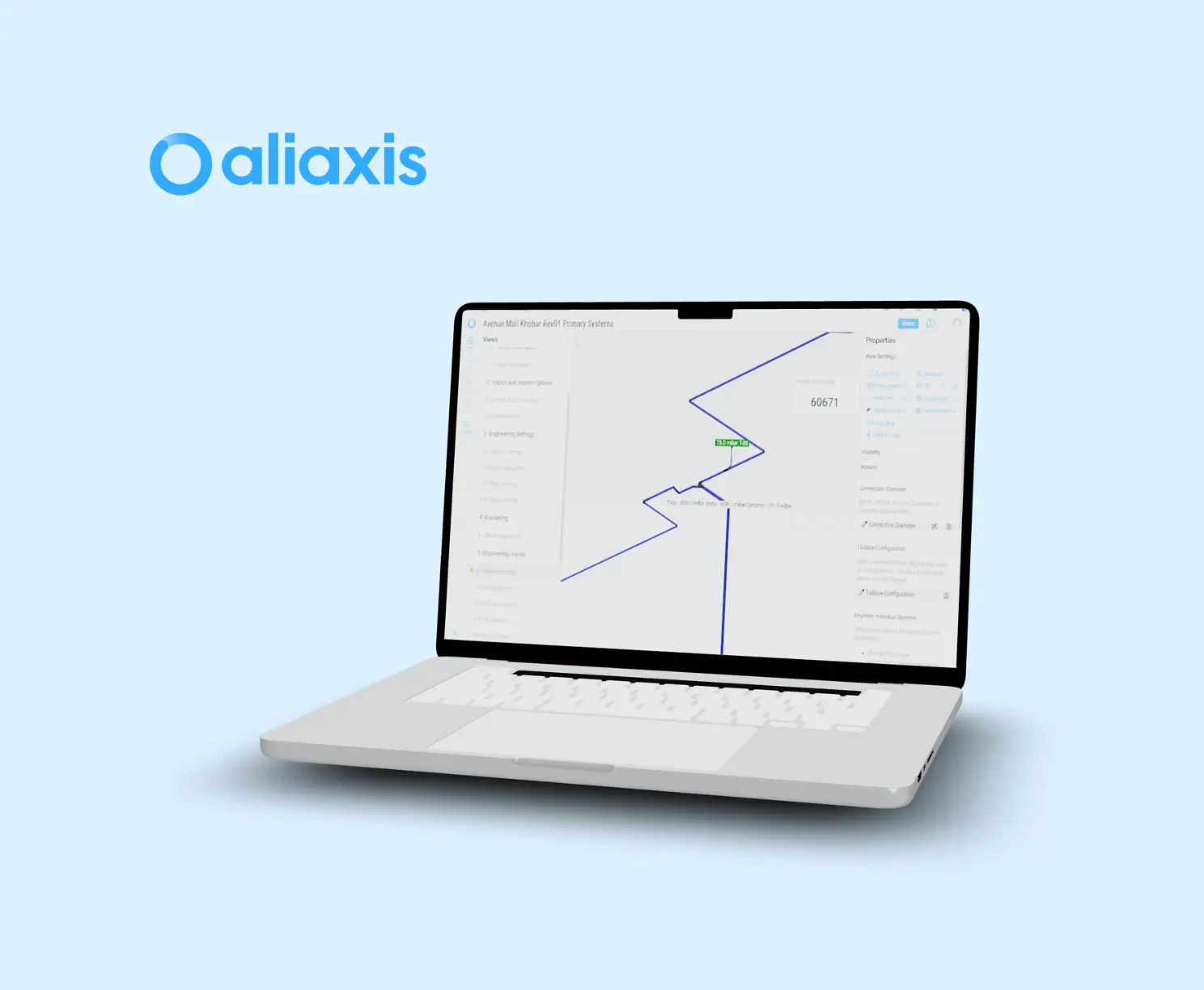
An example of the practical application of artificial intelligence and automation in construction is Akasison AutoPlanner – a solution we developed in collaboration with Aliaxis, a manufacturer of plumbing and energy systems. The tool supports the design of siphonic roof drainage systems by automating calculations, product selection, and the preparation of tender documentation.
The challenge
Previously, preparing a design and offer required the involvement of experienced technical advisors and could take up to several weeks. The process was not fully standardized, and its outcome depended on the knowledge of the specific specialist. Additional challenges included the manual selection of installation components, the risk of inaccurate calculations, and the inability to generate sufficiently precise BIM (Building Information Modeling) files required by clients.
The solution
The tool implemented on the Hypar platform analyzes technical drawings and client-provided data, then automatically designs the installation, performs calculations, and selects the appropriate Aliaxis products. The system verifies the design's accuracy, allows for rapid changes, and generates detailed bills of materials and BIM files in RVT format.
The technical expertise of our specialists has been codified into rules and algorithms, enabling the company to prepare quotes faster, more consistently, and with greater precision. The solution also reduces material waste, minimizes the risk of errors, and simplifies the onboarding of new technical advisors.
Results
The implementation of Akasison AutoPlanner has reduced engineering time from 8 hours to just 1 minute and shortened the quote preparation process from 6 weeks to 3 days. Automation has also enabled a reduction in the construction waste margin from 10% to 3% and a 6–8% decrease in material consumption.
By codifying technical knowledge into algorithms, the solution helps eliminate errors, ensures a more efficient quoting process, and streamlines subsequent project stages. This innovation was recognized at the Robotics and Automation Awards 2024 in London, where it received the award in the "The Best Use of Robotics or Automation in Construction" category.
AI in the construction industry – opportunity or risk?
Many companies are concerned about the potential risks associated with using artificial intelligence algorithms. You might think that, as an automation agency, we would simply say there is nothing to worry about. Nothing could be further from the truth – our experience tells us that when implementing innovative AI solutions, you must always keep potential risks in mind. In construction, these risks include:
incorrectly generated calculations,
inaccurate 3D visualizations,
minor errors that may seem harmless but can negatively impact work on the construction site.
However, this does not mean you should abandon the technology. AI is constantly evolving, and the risk of errors can be effectively mitigated by properly designing the entire process. One approach is "human in the loop," where employees verify and approve system-generated results before they are used further. For processes requiring extreme precision, AI models can also be combined with static, deterministic algorithms that operate according to clearly defined rules and constraints.
Testing, data validation, access control, and determining which decisions the system can make independently versus those that must remain with a human are also crucial. Properly implemented artificial intelligence does not replace expert oversight; instead, it supports specialists in performing time-consuming tasks, analyzing data, and making faster decisions.
With the right safeguards in place, AI in construction can bring significant benefits to companies – from shortening the time required to prepare quotes and designs to reducing errors and making more efficient use of materials, budgets, and employee time.
Subscribe and receive additional content, checklists and business automation tips from us.
Thank you for subscribing to our newsletter!
You will soon receive a welcome message at the email address you provided.
Oops! Something went wrong, failed to send the form.
Contact us to get a quote for your automation
At Sagiton Automation, we help AEC companies streamline their business processes. Contact us today to get a quote for a solution that will help you automate your workflows!
6 Ways to Use Artificial Intelligence in Your Business
Find out in which areas of business the use of artificial intelligence is most cost-effective and what the biggest benefits of AI are for businesses.
Read more
Business automation
07.07.2026
automation-in-bim-plugins-for-aec-manufacturers
Automation in BIM Plugins for Autodesk Revit – Solutions for AEC manufacturers
Is your company looking to invest in a custom Revit plugin? Read our article to learn what process automations can be implemented in Revit.
Read more
Sales
07.07.2026
automation-of-tender-management-in-construction
Automation for Construction Contractors — Shorten Tender and Valuation Management
Manual bidding is increasingly blocking the development of construction companies. See how automatic collection of material bids and optimization of the bid preparation process can take real pressure off your team and speed up bidding decisions.
Read more
Contact us!
Select the topic you are interested in in the form and our specialist will contact you within 24 working hours.
Thank you for contacting us!
Your message has been successfully sent. We will reply as soon as possible.
Oops! Something went wrong, failed to send the form.




.webp)
.webp)