Choosing a CRM system often follows a similar pattern – before businesses commit to a payment plan, managers test various platforms, compare functionalities and pricing... only to find that every solution is missing something. One system lacks adequate automation, another requires additional paid integrations, and a third becomes very expensive with just a few users on the team. It's also common for even a basic tool like a CRM, after carefully calculating licenses, additional modules, and implementation costs, to exceed EUR 4500–5000 annually. What's worse, despite the high fees, the company still has to adapt its processes to the limitations of the off-the-shelf solution.
Just a few years ago, creating a custom CRM system was a solution reserved exclusively for large organizations with massive IT budgets.
Fortunately, today the situation is completely different. The development of no-code and low-code technologies has made building dedicated business applications faster, cheaper, and much more accessible, even for small and medium-sized businesses.
More and more businesses are realizing that instead of adapting sales processes to the limitations of off-the-shelf platforms like Pipedrive, Livespace, or HubSpot, it's better to create their own CRM system perfectly tailored to how the company operates. Modern no/low-code solutions allow applications to be implemented in just a few days, without the need to program all functionalities from scratch in the traditional way. This enables companies to automate sales faster, integrate various tools, and evolve the system alongside their business — without paying for features they'll never use.
A dedicated CRM no longer has to mean a multi-month IT project costing dozens of thousands of euros. In many cases, a custom solution proves more cost-effective than multi-year SaaS subscriptions and the constant compromises associated with the limitations of off-the-shelf systems. You can read more about the advantages of sales CRMs created with modern technologies and AI in the following paragraphs.
5 benefits of replacing traditional CRM systems with a custom solution
Off-the-shelf SaaS CRM systems are convenient to start with, but as a company grows, they very often begin to create limitations – both technological and financial. In practice, many businesses pay for extensive platforms that aren't fully tailored to their sales processes, and every additional feature requires further integrations, extra payments, or compromises.
Modern technologies and AI now allow for the creation of a dedicated CRM system precisely tailored to a company's needs, eliminating many problems characteristic of off-the-shelf SaaS solutions. In the following paragraphs, we present 5 main reasons why we believe it's worth replacing dedicated SaaS tools with custom CRM solutions.
The cost of a dedicated CRM system can be lower than an annual SaaS subscription
CRM tools typically charge monthly fees, often on a per-user basis. For popular platforms like Livespace or HubSpot, monthly costs can quickly escalate as your sales team grows. If a company employs several or a dozen salespeople, subscription fees can amount to even several thousand euros per month.
Meanwhile, an alternative to Pipedrive or Salesforce, built with new technologies and tailored to a company's needs, costs from around several thousand euros as a one-time implementation. Importantly, such a customized solution usually has no user limits, so it can be used without constantly increasing license costs, even if the business grows rapidly.
Greater control over CRM software costs
When choosing a SaaS-based CRM system, a business is dependent on the pricing policy of the provider. Monthly fees can change from month to month, and price guarantees, if they exist at all, usually apply only for a specific period, such as 12 months.
A dedicated sales management system is much easier to budget for in this regard. As a company owning the software, you have greater control over application development and maintenance costs, without the risk of sudden subscription increases or limitations stemming from a chosen package.
Are you looking for an alternative to Hubspot, Pipedrive, Salesforce, or another CRM tool? Contact us and get a quote for a customized solution!
Faster implementation of additional integrations and configurations
Many companies assume that once a ready-made CRM system is implemented, everything will work immediately. In real world, it very often turns out that basic versions of these systems have limited functionalities and require additional configuration or paid extensions.
Sales process automations, CRM system integrations, email tracking, or phone call tracking often require additional tools or API communication. If the chosen CRM does not have the necessary native capabilities, implementing missing functionalities can be time-consuming and costly.
When creating a dedicated CRM system, your solution can be designed from the outset with specific integrations and company processes in mind. This makes configuration simpler, and the entire system better supports the daily work of sales representatives.
Another problem with "adding" business process automations to existing solutions is that these tools often force businesses to upgrade their plans to access certain features. For example, in one CRM system popular among small businesses, to work with conditional variables dependent on pipeline stages, you have to... upgrade your plan. Do you want "additional" access to sales monitoring dashboards? You also have to upgrade your plan. This way, if you have several users, the monthly subscription cost can drastically increase. This is particularly burdensome, especially if your company was forced to upgrade the package for the entire team just to use one key feature.
When you create your own CRM, this problem doesn't exist – as the software owner, you won't incur costs for upgrading/changing your plan. The costs you might face are limited to creating the integration itself and any potential subscription for an additional tool you wish to connect with your sales system.
No vendor lock-in
By opting for its own CRM platform, a company gains full independence in system development and maintenance. A dedicated solution can be expanded at any time with new sales automations, additional integrations, or features tailored to real business processes. Most importantly, as the software owner, you get access to the source code and full control over data related to features, system development, and the direction of future changes. This makes it the best choice for businesses that want to build stable sales processes without the risk of being dependent on the limitations, price changes, or policies of a single vendor.
With off-the-shelf SaaS systems, the situation is often different. If a company needs changes to the CRM platform or additional functionalities, it usually contacts the implementation partner first, who then relays the requirements to the software vendor. Such a long communication chain makes implementing changes time-consuming and costly – businesses often pay high rates for modifications, wait a long time for completion, and ultimately receive solutions that don't fully meet their expectations. Additionally, customer support in the SaaS model can be limited by the vendor's policy and the capabilities of the chosen package.
With a custom development approach, the company works directly with the team developing the system, making the process of implementing new features faster, more flexible, and better tailored to the actual business needs compared to SaaS solutions.
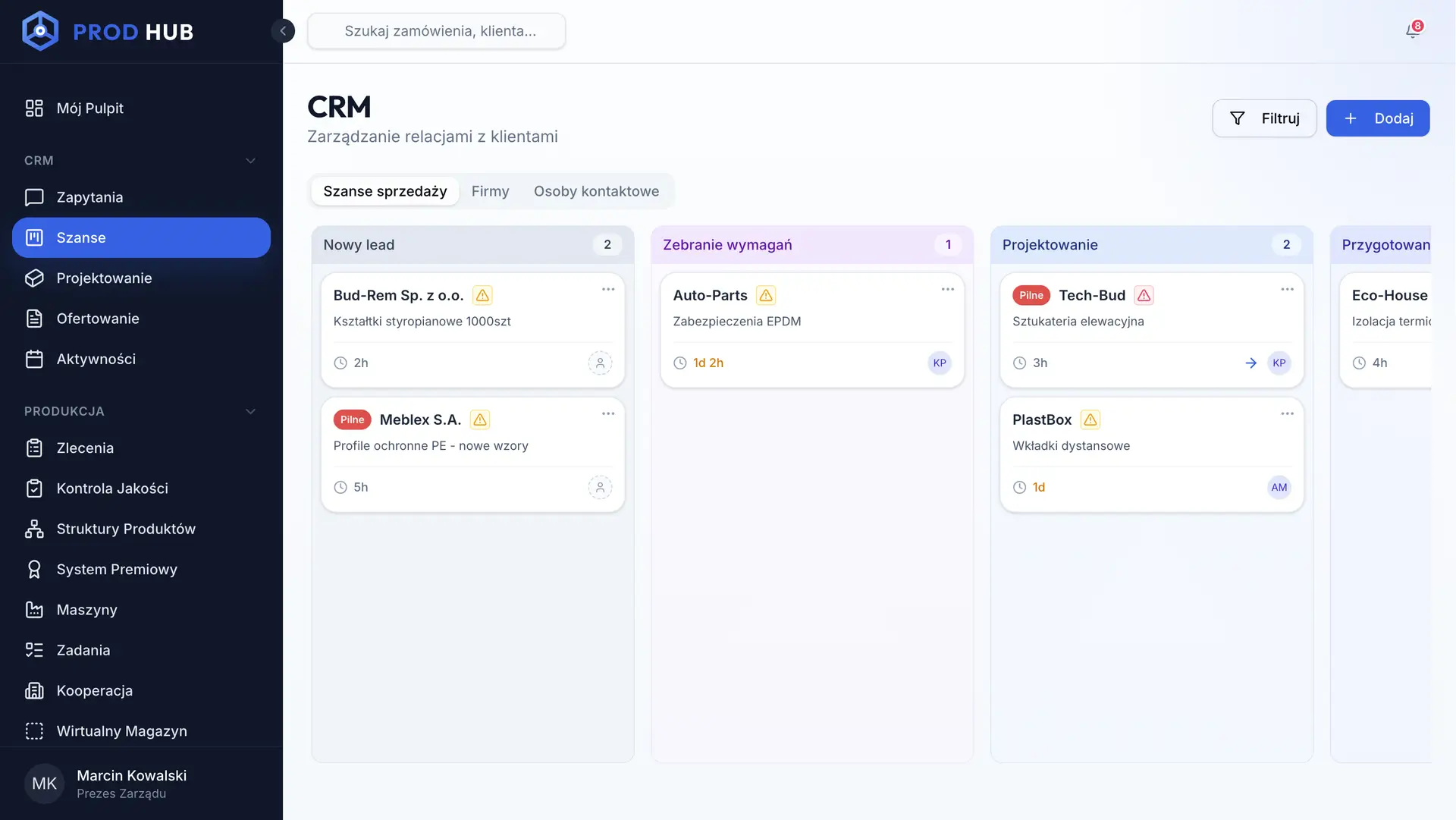
Demo of a lead management tool we created for one of our clients in the manufacturing industry
The best CRM system is one that truly supports sales representatives
Also remember that the approach of more is better doesn't work for business tools. The best CRM system for managing the sales process isn't an application packed with every possible automation.
For many small and medium-sized businesses, a solution that has exactly the functionalities the team needs – without being overloaded with unnecessary modules – will work much better. Sales representatives handling a large number of B2B inquiries don't have time to fill out dozens of fields or use complex features that don't support their daily work.
That's why more and more companies are choosing to create their own CRM with business process automations tailored to a specific sales model. Modern solutions allow for quick and relatively inexpensive implementation of a CRM that meets the organization's actual needs.
Case study: Livespace CRM expansion project – implementation of new automation functionalities
A B2B company with four independent sales departments and a large number of inquiries from potential clients approached us. The organization was using the Livespace CRM system, but as sales scaled up, limitations related to lead management and sales process automation began to emerge.
One of the most troublesome drawbacks of Livespace CRM was the inability to separate the lead qualification process into MQL (Marketing Qualified Leads) and SQL (Sales Qualified Leads) stages. All inquiries entered the system as a single contact type, which complicated customer data management, the preparation of accurate sales reports, and the analysis of marketing campaign effectiveness.
The client therefore needed a way to expand their existing contact management system and migrate some CRM functions to a more flexible environment. We created a dedicated alternative to Livespace based on Airtable, which was integrated with WordPress forms, GetResponse, and the company's internal messenger (Slack). All leads began flowing into a single central system, where they are automatically aggregated, qualified, and assigned appropriate statuses.
Additionally, we implemented automatic lead distribution among sales representatives. The system considers team availability, assigns inquiries rotationally, and eliminates the need for manual process management. After qualification and passing the MQL stage, the lead automatically enters Livespace CRM as a ready sales opportunity with complete data.
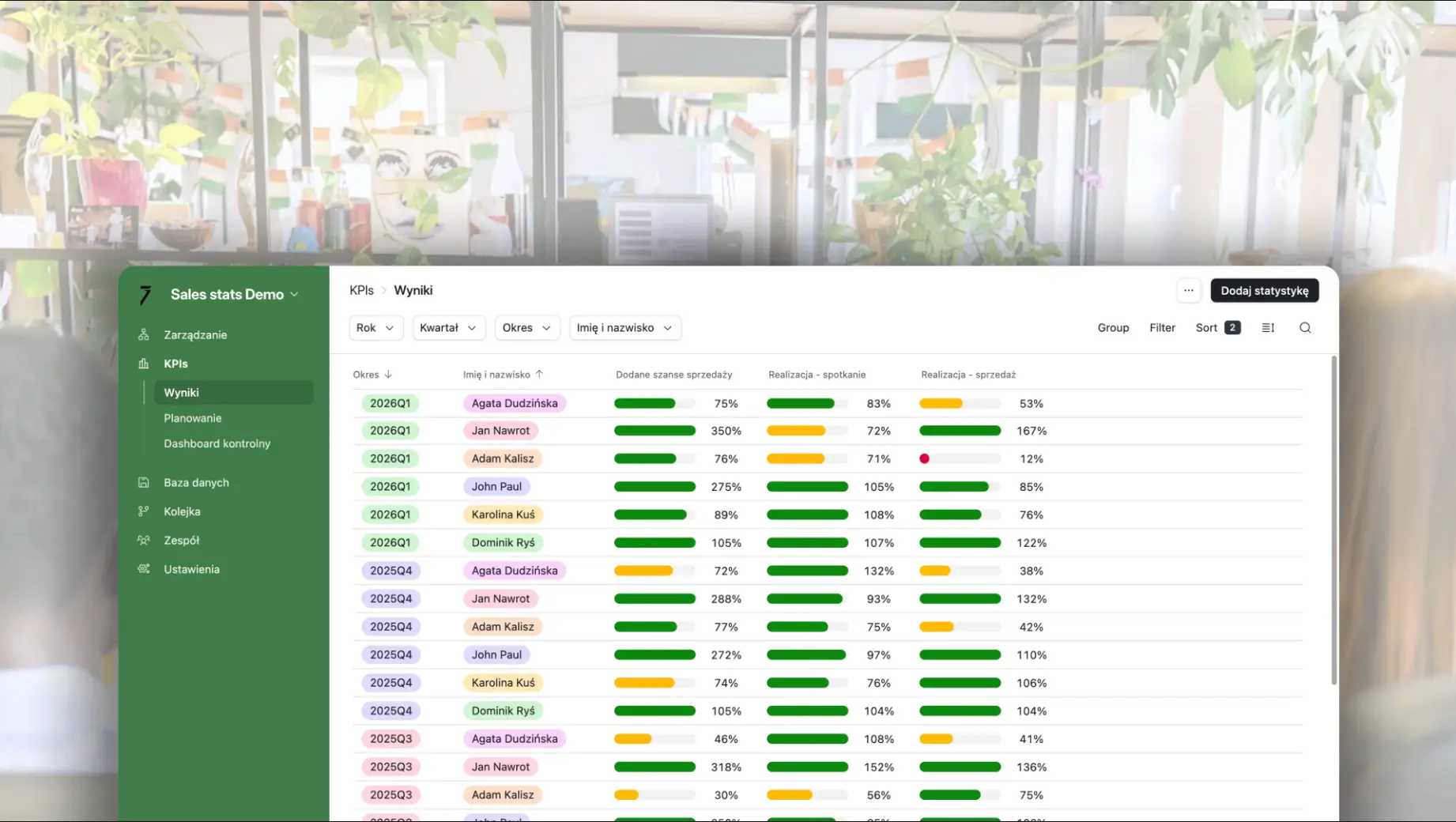
KPI Dashboard we created for our client's sales team
Finally, we also extended the project with a module for CRM Reports – the management dashboards created within it enable the analysis of sales performance. Thanks to such advanced CRM functionalities, the company gained fuller control over the sales process and the ability to continuously monitor the results of all sales departments.
As a result, the client retained their existing CRM system while eliminating its biggest limitations by implementing a dedicated system that supports sales process automation and real-time data reporting.
When should small and medium-sized businesses switch from an off-the-shelf CRM system to a dedicated solution?
For small and medium-sized businesses, the decision to change CRMs should primarily start with a cost analysis. Typically, if a company spends around EUR 5000 annually or more on subscriptions, licenses, and additional marketing automation modules, it very often turns out that creating a custom system tailored to the company's processes will be a more cost-effective solution. A dedicated solution can combine business process automations and modern interfaces built with no/low-code technologies, providing the company with a tool better suited to its daily operations than off-the-shelf SaaS platforms.
However, many companies start looking for alternatives to Salesforce, HubSpot, or other popular systems not only due to costs but also because of functional limitations. Very often, businesses reach a point where the development of sales processes requires additional integrations, tools, or paid extensions. If expanding the current sales pipeline management system significantly increases the budget – not just through a higher subscription, but also the costs of implementing further applications – it's worth considering a dedicated CRM solution, even with smaller expenditures.
This is especially true for companies that are intensively developing customer service automation, expanding sales funnels, or needing more flexible sales process management. In such situations, a custom system allows for faster adaptation of functionalities to changing business needs, without having to adapt the company to the limitations of an off-the-shelf tool.
Besides the budget itself, it's also important to consider the implementation time for a new solution. Every change to a lead management system involves an adaptation period for the sales team and the need to get used to operating the new CRM. At the same time, a significant advantage of dedicated applications built with no/low-code technologies is the ability to quickly build interfaces and adapt them to the real needs of users. This allows sales representatives to work with simpler and more intuitive views.
If you're looking for a CRM alternative and want to find out which solutions would be best for your company, contact us. We'll help you analyze your current sales processes and show you the possibilities offered by a dedicated CRM system based on modern technologies and AI!
Join our newsletter
Subscribe and receive additional content, checklists and business automation tips from us.
Thank you for subscribing to our newsletter!
You will soon receive a welcome message at the email address you provided.
Oops! Something went wrong, failed to send the form.
Build an alternative to Hubspot, Pipedrive, or other sales systems with us
At Sagiton Automation, we help our clients' businesses switch from expensive SaaS applications to more affordable and flexible solutions. Contact us and get a free quote for your business!
AI Transcriptions for Sales – Speed Up Sales Processes with AI
The times when salespeople had to manually record arrangements with the customer are gone irretrievably. Stacks of notes, understatements or lost emails are a thing of the past. Read our article to learn how automated call transcription can speed up your sales processes and help you turn your data into a competitive advantage.
Read more
Business automation
07.07.2026
organising-tools-and-data-in-the-companies
Too many business tools? See How Automation Organizes Data
An overabundance of SaaS tools often leads to data dispersion, increased costs, and decreased operational efficiency. In the article, we explain how to organize the flow of information and build a scalable work environment through the automation of business processes.
Read more
No/low-code
16.07.2026
low-code-and-no-code-development
Low-code vs. no-code: what are they and how do they differ? Which one should you choose for your business?
Low-code and no-code are revolutionizing the way IT solutions are created. These technologies allow you to build applications and functional solutions without traditional programming, opening up new possibilities for those without a technical background. Read our article to learn more about what low-code and no-code solutions are.
Read more
Contact us!
Select the topic you are interested in in the form and our specialist will contact you within 24 working hours.
Thank you for contacting us!
Your message has been successfully sent. We will reply as soon as possible.
Oops! Something went wrong, failed to send the form.






.webp)

